

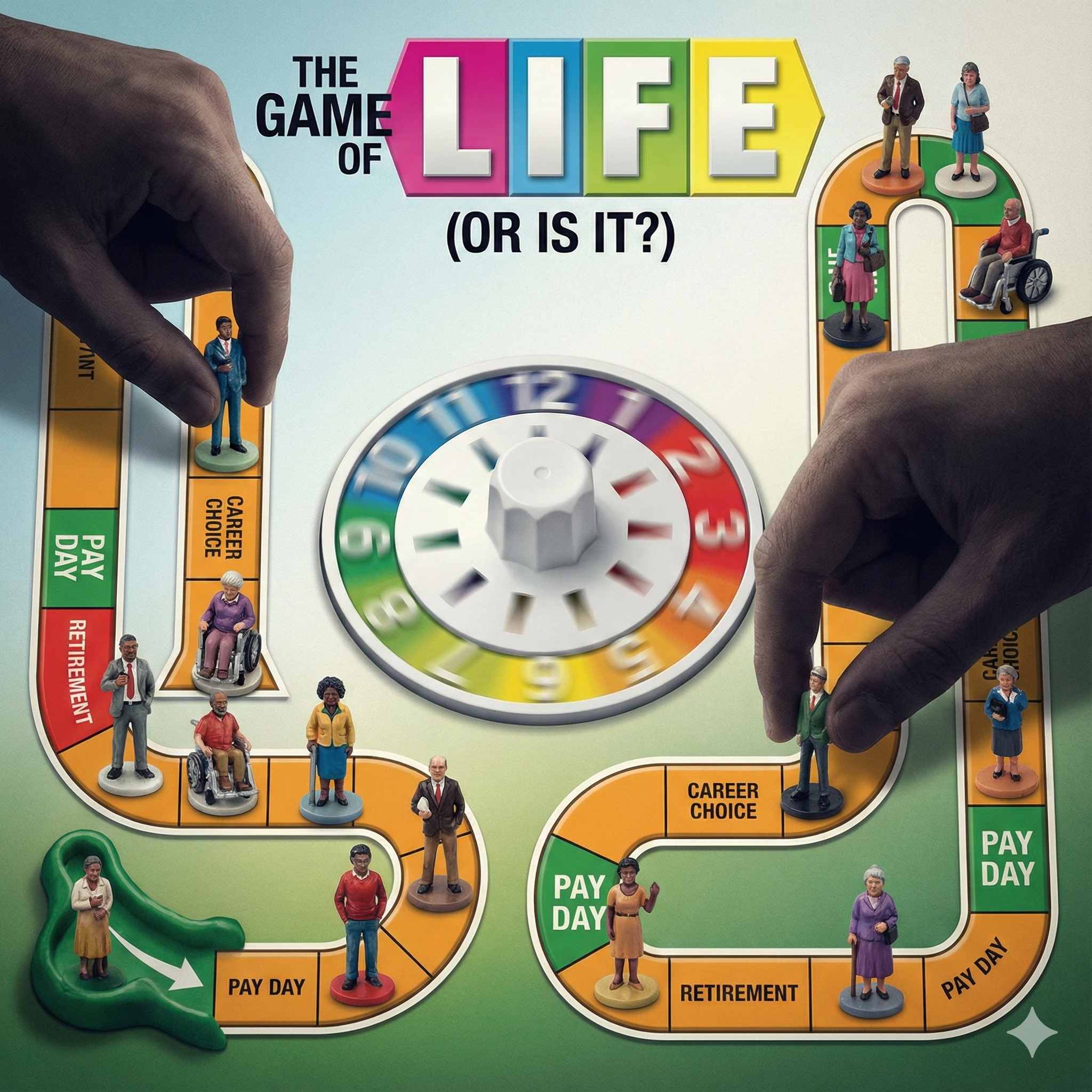
Remember the satisfying click of that colorful plastic spinner? We all gathered around the table on rainy Saturday afternoons. The goal seemed simple enough to grasp back then. You choose between crushing college debt or an immediate career path. Then, you race toward a comfortable retirement at Millionaire Estates. It felt like innocent, deterministic fun.
Yet, what if that innocent fun was actually deeply deceptive? The choices provided aren’t really choices at all. The board dictates your fate significantly more than your strategy does. You are merely an observer of your own little plastic destiny.
This reality becomes clearer when examining the game’s surprising origins. The modern version we know is essentially a sanitized capitalist fantasy. However, the original 1860 version, created by Milton Bradley, was shockingly different. It was originally titled “The Checkered Game of Life.” As the video below explains, it wasn’t about getting rich; it was about avoiding moral ruin and “suicide.”
The video highlights a massive, fundamental shift in philosophy. Originally, landing on squares like “Bravery” moved you forward, while “Idleness” led to ruin. It was a direct tool for teaching strict Victorian morals.
Consequently, the modern version replaced moral agency with sheer financial accumulation. Now, the game plays you by forcing a narrow definition of success upon the players. You don’t win by being a good person; you win by being lucky with fake money.
Perhaps it is time to rethink how we approach this classic. Are we making active decisions, or just reacting to the spinner’s whim? To truly understand board game history, check out the Strong National Museum of Play’s archives. Ultimately, realizing the game is rigged might be the only way to truly win.
About the Author